I spent six years working the gate at O'Hare, and in that time I watched thousands of bags get stacked, thrown, crushed, and occasionally lost. That is the lens for this carry-on travel gear comparison. Not which piece looks best in a product photo, but which one still does its job after the airline has treated it like a rental. The four items here cover the whole range of what a traveler actually buys: a TSA-approved backpack, a five-piece packing cube set, a hardshell three-piece, and a 14.5-inch underseat roller. They solve four different problems, and only one of them is really about the bag itself.
If you buy one thing from this list, buy the packing cubes. If you are replacing a bag, the underseat roller is the one I would point a normal flyer toward, because it removes the gate check risk entirely.
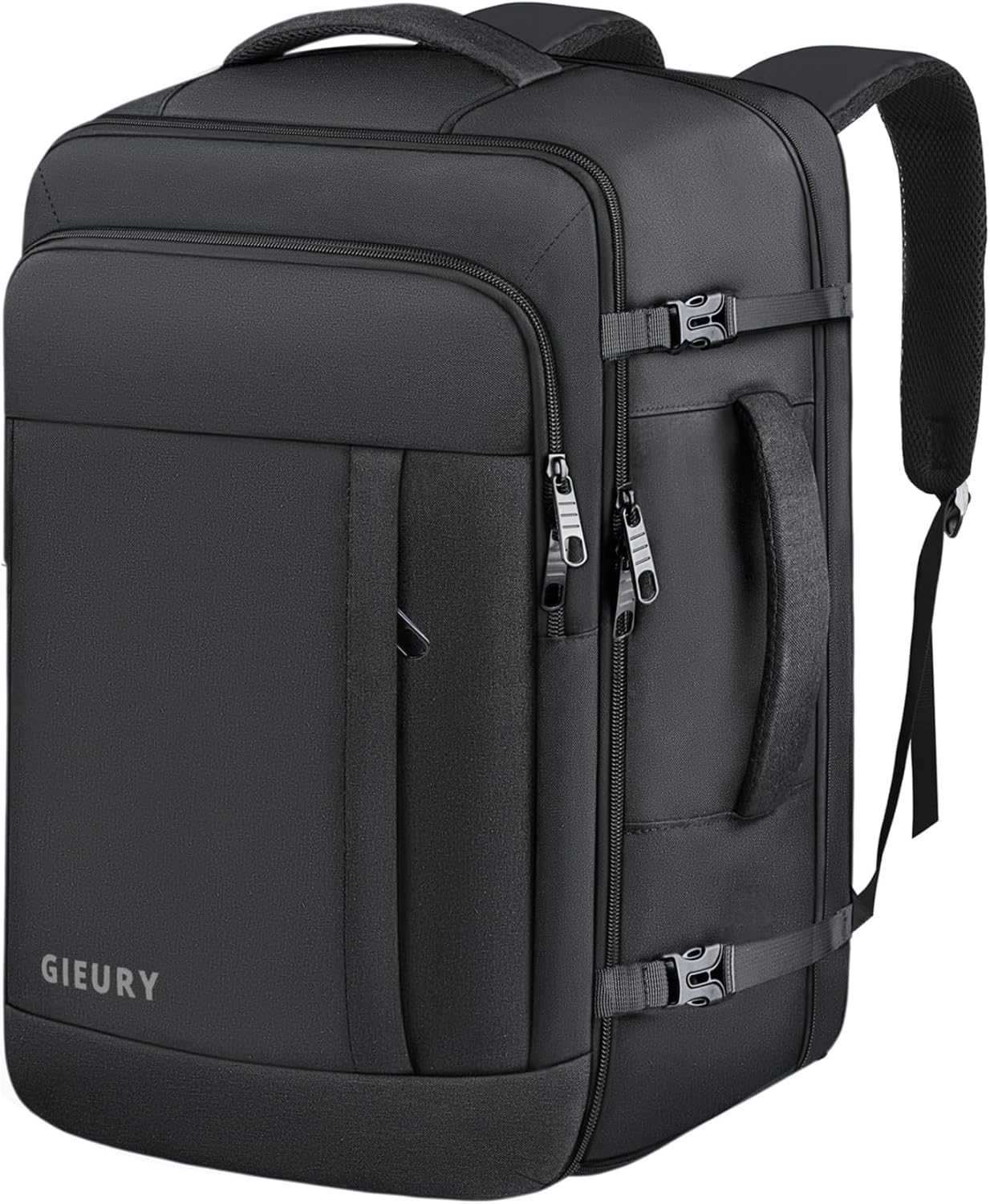
Carry On Backpack TSA Flight Approved, Large Travel Backpack for Men Women
No wheels and no handle to break, opens flat like a book, compresses into whatever space the seat in front of you offers
Soft body means anything fragile inside is on you, and a full pack gets heavy on one shoulder
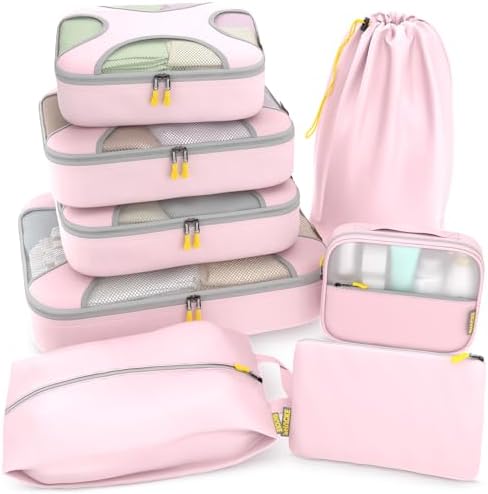
Shacke 5 Set Packing Cubes for Travel with Laundry Bag (Pure Black)
Cheapest way to fix a disorganized bag, laundry bag keeps dirty clothes away from clean ones
Cubes do not create space, and a five-piece set is more pieces than a weekend trip needs
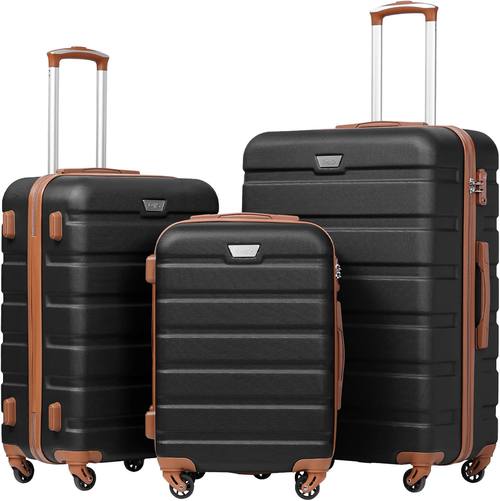
Coolife Luggage Set, 3 Piece Lightweight Durable Hardshell, Apricot Black
Shell shrugs off rain and belt scuffs, three sizes cover a weekend or a longer trip
You are buying bags you may not need, and hardshell corners take the belt impact first
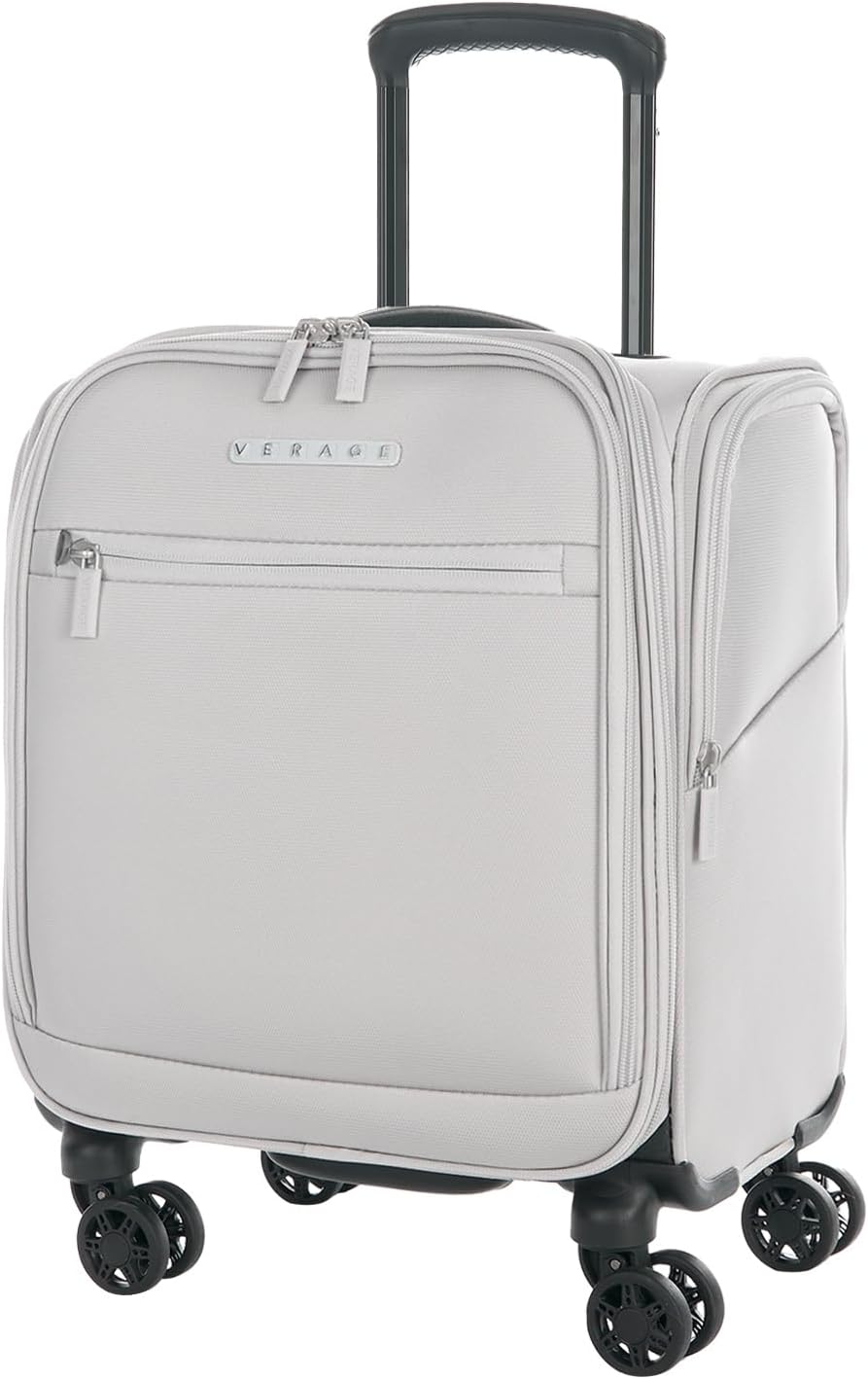
Verage Underseat Carry On Luggage with Wheels,14.5-Inch,Cloud Gray
Fits under the seat, so it never gets gate checked, rolls on wheels instead of riding your spine
Small volume, so it is a two or three day bag at most, and small wheels hate carpet
Prices and availability were captured from Amazon Creators API and may change.
The gate test: how I judge anything that flies
Four things decide whether a bag survives a year of real flying, and none of them are on the marketing sheet.
The first is linear inches. US carriers generally draw the carry-on line at 22 x 14 x 9 inches including wheels and handle, and they measure the whole thing, not the shell. A bag advertised at 21 inches that measures 23 with the wheels attached is a gate check waiting to happen. Check the current rules with your airline before you fly, because those numbers get revised and enforcement is uneven from airport to airport.
The second is wheelbase. A bag with a narrow wheelbase tips when you walk fast. A bag with a wide one tracks straight and lets you pull it with two fingers. You can test this in a store in ten seconds: load it, push it away from you, and see whether it stays upright or falls toward its own corner.
The third is handle wobble. Grab the extended handle and shake it side to side. If there is play before the first flight, there will be rattle after the tenth. The handle is the second thing to die on a bag, right after the zipper.
The fourth is the zipper itself. Run it the full length with the bag empty and feel for the point where it catches the liner. That catch is where it will fail, usually at the worst possible moment, usually with a connection to make.
None of that requires a lab. It requires ten minutes in a store and a willingness to look like a weirdo in the aisle.
I am not going to claim twenty flights on every bag in this list. What I can do is tell you exactly how I judge them, and what to check before you spend money on any of them.
The TSA-approved backpack: the bag that cannot get gate checked
The Carry On Backpack TSA Flight Approved, Large Travel Backpack for Men Women is the answer to the single most annoying thing that happens at a gate, which is being told your bag does not fit the sizer and has to be checked. A soft backpack has no rigid frame to argue about. It compresses, it slides under the seat in front of you, and it never touches the belt.
The trade-off is weight distribution. Everything rides on your shoulders, and a fully packed bag gets heavy by the second hour. The other trade-off is protection. There is no shell between your laptop and the world, so anything fragile needs its own padding. That is where the packing cubes come in, and it is not a coincidence that these two are on the same list.
If you are a one-bag traveler, this is the category that rewards you most. No wheels means no wheel damage. No handle means no handle wobble. No shell means no cracked corner. It is the lowest-failure design in travel gear, and the cheapest to replace if it ever does fail.
Packing cubes: the best value in this entire comparison
The Shacke 5 Set Packing Cubes for Travel with Laundry Bag (Pure Black) is the purchase I recommend to more people than anything else on this page. Not because cubes save space, because mostly they do not. They save your sanity. At 3am in a hotel room, in the dark, with a flight in six hours, you are not unpacking a bag. You are pulling out one cube. That is the entire value proposition, and it is worth every cent.
The laundry bag is the quiet win here. Dirty clothes go in one place instead of getting folded back in with clean ones, and the bag compresses down as the trip goes on. If you have ever packed a damp swimsuit next to a clean shirt, you already understand why this matters.
My honest criticism of a five-piece set is that it is more pieces than most trips need. Two cubes and the laundry bag will cover a four-day trip. The rest will live in a drawer until you take a two-week trip or start packing for someone else. That is not a reason to skip it. It is a reason to expect to use half the set.
Hardside: the Coolife three-piece and the set problem
The Coolife Luggage Set, 3 Piece Lightweight Durable Hardshell, Apricot Black is the hardside option in this group, and hardside wins exactly one argument convincingly: weather and belt scuffs. A hard shell shrugs off rain, mud, and the black streaks that soft bags collect in a cargo hold. If you fly into wet climates or check bags regularly, that matters more than anything else on this page.
Where hardside loses is at the corners. When the belt drops a case wrong, the impact lands on a corner, and that is where shells crack. I have seen it happen to expensive cases and cheap ones alike. The design has not solved this, it has only made the cracks prettier.
My real objection is the set itself. You are buying three bags when you probably need one, and the largest one will spend most of its life in a closet. Sets are sold because they raise the average order value, not because travelers need three sizes at once. If the price for all three works out to less than you would pay for one comparable hardside case, buy the set and treat the extras as a bonus. If it does not, buy the single size you will actually fly with. The size you actually need is the one that never gets gate checked.
Hardside is also the category where the weight math hurts most. A heavier shell eats into your weight allowance before you pack a single thing. Weigh the empty case if you can, and compare that number to the weight limit on your airline.
The underseat roller: small, and that is the point
The Verage Underseat Carry On Luggage with Wheels,14.5-Inch,Cloud Gray is the smallest thing here and the one I would hand to a normal flyer taking a two or three day trip. It fits under the seat, which means it never gets gate checked, and it rolls, which means your back is not carrying it through a terminal.
The catch is capacity. A 14.5-inch underseat bag holds a couple of outfits, a laptop, and not much else. If you pack for a week, it is not enough. If you pack like someone who has done this before, it is plenty for a short trip.
The second catch is the wheels. Small wheels are fine on tile and terrible on carpet. Test them on carpet before you commit, because a bag that fights you in a hotel hallway is a bag you will stop using. Wheels that spin freely are the minimum. Wheels that drag are a design failure.
Where each one loses
The backpack loses on protection and on your shoulders. The cubes lose on volume, because they organize without creating space. The hardshell three-piece loses on cost per useful bag and on corner durability. The underseat roller loses on capacity and on carpet.
That is the honest version. Every one of these is a compromise, and the compromise is only wrong if you picked the wrong one for your trip. A traveler who flies twice a year and checks a bag has different needs from a consultant who flies twice a week and never checks anything.
What $200 actually buys
If you have a $200 budget and you fly a few times a year, here is the order I would spend it in.
First, packing cubes. They make every other bag work better, and they cost the least.
Second, decide between the backpack and the underseat roller based on how much you carry. The backpack is better for laptops and one-bag travel. The roller is better for short trips where you want your hands free and your back unloaded.
Third, only consider the hardshell three-piece if you check bags regularly or need multiple sizes for a family. Otherwise you are paying for a closet filler.
The budget question is not "which bag is best." It is "which bag gets used most." A cheap bag you fly with forty times is a better purchase than an expensive one that stays home because it is too big or too heavy.
What I am watching next
The interesting shift right now is that airlines keep tightening carry-on enforcement, and every time they do, the soft bag wins. A backpack or a soft duffel compresses into a sizer in a way a rigid shell never will. I expect softside to make a real comeback over the next two years, and I expect the first brand to fix zipper reliability on a soft bag to take a serious chunk of the frequent flyer market.
The other thing I am watching is the underseat category. As more airlines start charging for overhead bin space, the bag that fits under the seat stops being a niche product and becomes the default. The Verage is one of the better executions of that idea right now, because it gets the two things that matter right: it is small enough to stay under the seat, and it rolls instead of hanging off your shoulder.
Until then, buy the size you actually need. That is the whole game.