Most people settle the question of carry-on and checked luggage at the check-in counter, with the bag already zipped, the scale already blinking, and a line of strangers watching them move three pairs of shoes into a tote bag. That is the worst possible time to make the call, and it is the reason this article exists.
The decision is not about which case looks better in the ad. It comes down to two questions: what you are packing, and how you are flying. Answer both honestly and the choice takes about five minutes.
I spent six years as a gate agent at O'Hare before I started reviewing bags full time. I have watched thousands of rollers get gate checked, jammed into sizers, and dropped down the belt. The travelers who never have a problem are the ones who picked the right size on purpose instead of by accident.
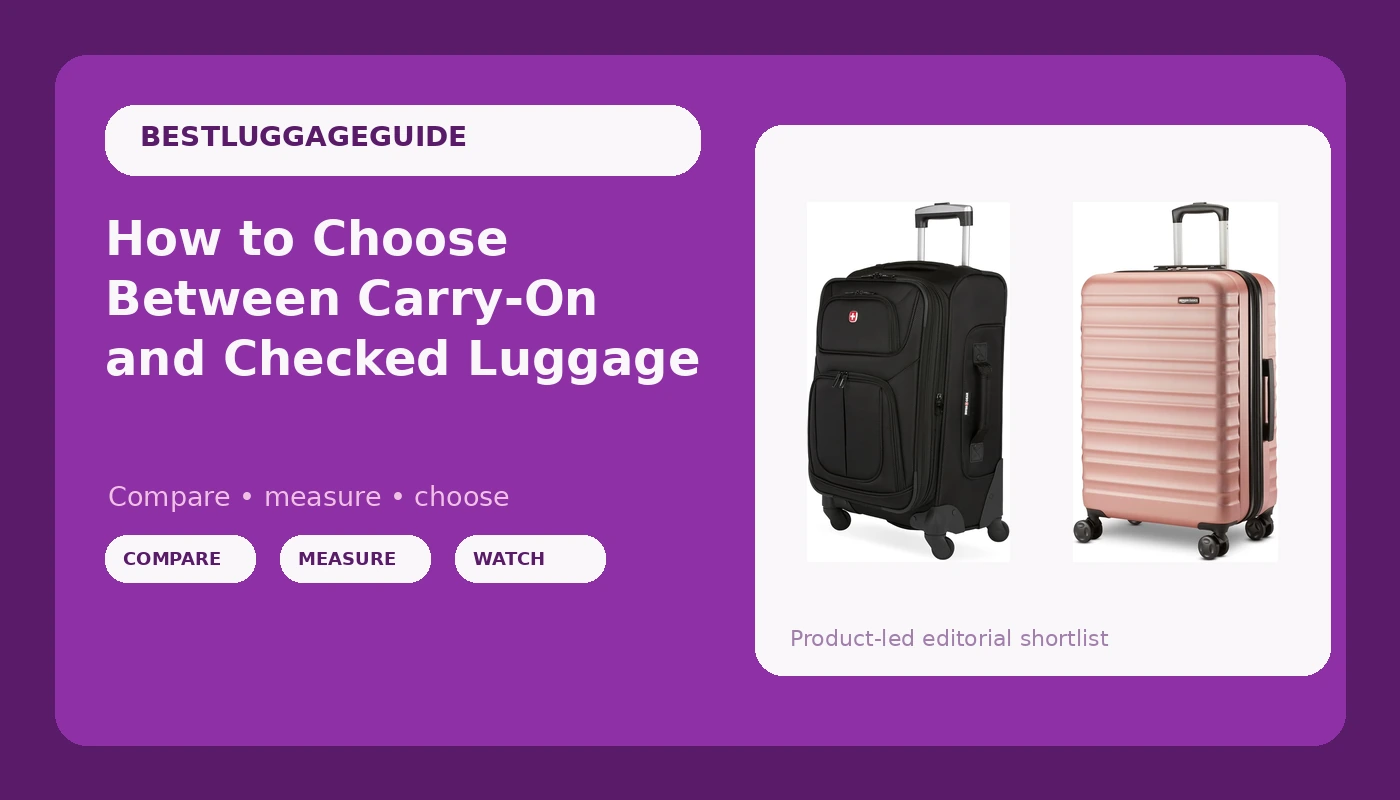
What follows is how to make that call, plus the two bags I would put on either side of the line: a softside carry-on for the short trips, and a 26-inch hardside for the trips where something has to get checked.
Why you should trust me
I worked the counter and the boarding door at O'Hare for six years, which means I have seen what happens to a bag after you hand it over. I have flown more than 120 segments a year for the last four, and I keep 11 bags in active rotation so I can compare them against each other instead of against memory.
I judge every case the way I did at the gate: what survives the belt, what fits the bin, and what the airline will not fight you about. My rules are simple. I do not recommend a case I have not flown with at least five times. I test wheel noise on both tile and carpet, because a wheel that sounds fine in a carpeted hallway will rattle like a shopping cart in a terminal. I pull the zipper around the entire track before I trust a bag. I disclose press samples when I have them, and I check an airline's current baggage page before I say a word about its limits, because those numbers change more often than most travelers realize.
The two questions that settle it
Question one: how are you flying? A direct flight on a mainline jet is a different problem from a two leg trip on a regional jet with a tight connection. Basic economy is where carry-on rules get restrictive, so read the fare rules on your specific ticket before you assume anything. If you are connecting through a small airport on a regional aircraft, expect the bin situation to be tighter and plan accordingly.
Question two: what are you packing? Count days, count shoes, and count anything bulky. A week of t-shirts and shorts is a carry-on problem. A week of sweaters, boots, and a hair dryer is a checked bag problem, and pretending otherwise just means you pay the gate check fee at the door with less time.
Here is the short version:
- Five days or fewer, warm weather, no special gear: fly carry-on only.
- Longer than a week, cold weather, or anything bulky: check a 26-inch hardside and keep the essentials on your body.
- Somewhere in between: check the bulk and carry one day of clothes, so a delayed bag does not end your trip.
The number that matters here is linear inches, which is length plus width plus depth. Most US carriers frame their carry-on limit around 22 by 14 by 9 inches, which is 45 linear inches, but the exact figures vary by airline and they change, so measure your case with the wheels and the handle included and then check your carrier's current page rather than a forum post from 2019.
The two bags that cover both jobs
Here is the pair I would start with. One for the trips where you fly carry-on only, one for the trips where something has to go in the hold.
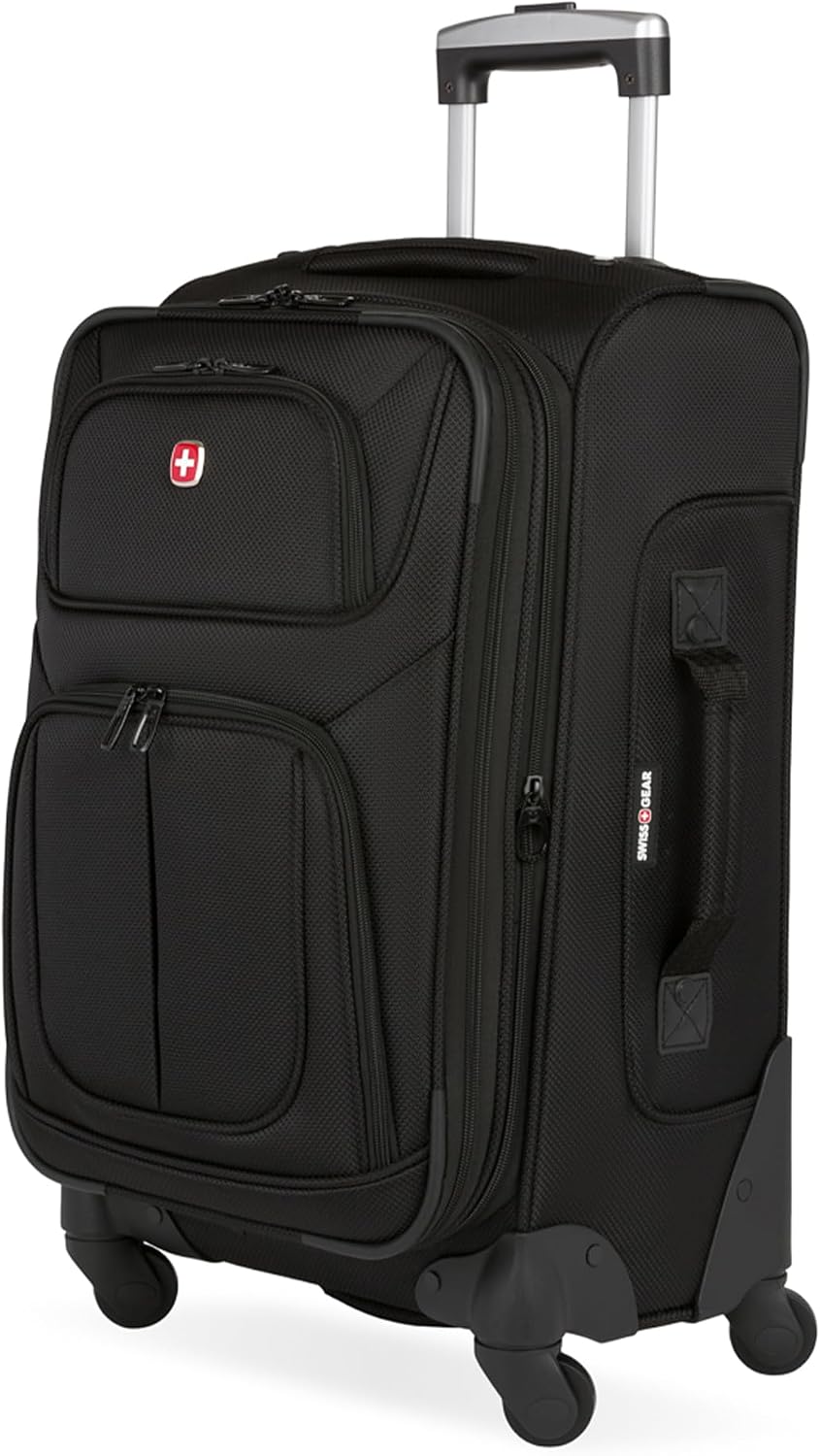
The carry-on pick: SwissGear Sion Carry-On Spinner Luggage, Softside Expandable, Lightweight Suitcase, Black, 22.75-Inch
 Visit on Amazon →
For the carry-on side of the line I want softside, and the reason is simple: fabric gives. When a gate agent pushes a bag into the sizer, or when you are wedging it into an overhead bin at an angle with a line behind you, a soft body yields where a hard shell will not. This Sion is expandable, it rolls on four spinner wheels, and softside pockets mean you can reach a laptop or a snack without opening the whole bag on the jet bridge. Check current Amazon price.
The nameplate reads 22.75 inches, and that is worth noticing. Some airlines publish a 22-inch carry-on figure, and the difference between 22 and 22.75 is exactly the kind of thing a gate agent spots at a busy boarding door. Measure it yourself with the wheels included before you fly, and know your carrier's current limit instead of guessing.
Flaws but not dealbreakers: Softside means the fabric and the zipper absorb the abuse a shell would take. The zipper is the first thing to die on any case, so pull it gently around corners, do not overstuff the expander, and know where your nearest repair shop is. Carry the bag by its handle, not by a strap.
Anyone flying short trips with soft goods and a laptop should start here.
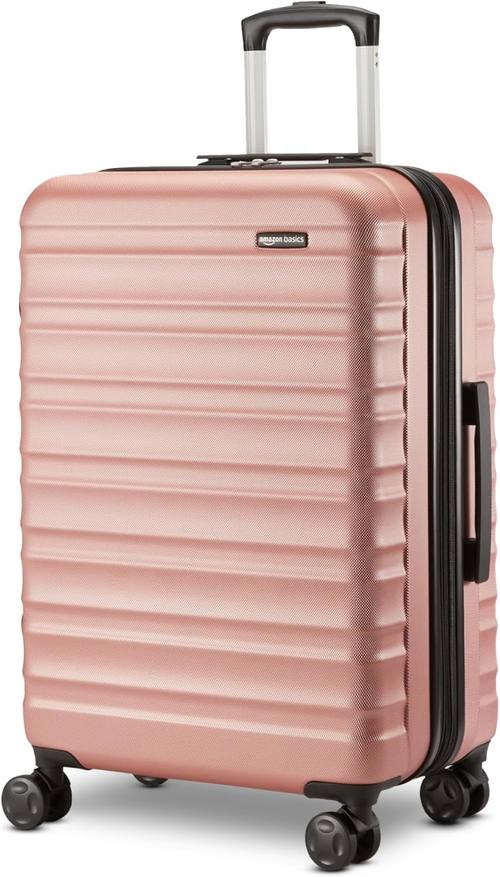
The checked-bag pick: Amazon Basics 26" Hardside Medium Checked Luggage, Expandable Hardshell Suitcase with Telescoping Handle, Scratch-Resistant Surface, Four Multi-directional Wheels, Rose Gold
 Visit on Amazon →
When the trip runs past a week, or the packing list includes boots, I flip to hardside, because a checked bag has a different job: it has to protect what is inside while it gets thrown. A shell takes the hit instead of your clothes. This Amazon Basics medium is expandable, rolls on four multi-directional wheels, has a telescoping handle, and the surface is built to shrug off scratches, which matters because a checked bag always comes home with stories. Check current Amazon price.
The rose gold is not a gimmick. Every carousel in the country is a sea of black 26-inch hardside cases, and a color you can pick out from 40 feet saves you ten minutes of squinting at every bag that rounds the bend. It also makes your case less appealing to whoever grabs the wrong one in a hurry. Look at the customer photos before you commit to a color, because screen colors lie.
Flaws but not dealbreakers: Hard shells can crack at the corners when the belt drops them wrong, and I have seen it more times than I can count. A checked hardside is a wear item, and the corner crack is the failure mode to expect after enough trips, so buy it understanding that the shell sacrifices itself for your gear. Keep the expander zipper closed until you are unpacking at the hotel, because an expanded checked bag is an overweight checked bag.
Anyone checking a bag on a long trip with a mix of clothing and shoes should start here.
How to run the split, step by step
Step one: read the itinerary before you pack a thing. Count the segments. Note whether any leg is on a regional aircraft, because smaller bins are where a 22-inch roller that fits a 737 gets gate checked on a regional jet. Note whether the fare is basic economy, since that is where the rules tighten. Two minutes of reading saves an argument at the door.
Step two: decide what you would need in the first 24 hours if the bag did not arrive. Medication, documents, chargers, a change of clothes, anything you cannot replace on a Sunday night. That list goes in the carry-on no matter which bag you end up checking.
Step three: weigh the empty case. Put it on a luggage scale at home and write the number down. Whatever the case weighs comes straight out of your allowance, and that weight is stolen from your packing. A heavy case is a smaller trip.
Step four: measure in linear inches with the wheels and handles included. Airlines measure the whole package, not the box. Use a tape measure, add length plus width plus depth, and compare against your carrier's current published limit. Do not trust a listing dimension by itself, including the ones above.
Step five: pack the carry-on to fit a bin, not a sizer. Pack it, then close it, then lift it over your head in your living room. If you cannot get it up there and turn it sideways, it is too full to be a carry-on in practice.
Step six: leave the expander zipper closed. Expansion is a hotel feature, not an airport feature. Every inch you expand is an inch that puts you in gate check territory at the worst moment of the boarding process.
Step seven: test the bag at home before the trip. Run the zipper all the way around the track. Wiggle the handle and check for handle wobble, because a new case should not wobble before its first flight. Roll it across tile and then across carpet and listen to the wheels. If it rattles like a shopping cart on day one, it will be worse on day one hundred.
Step eight: carry less than you can. The bag that gets gate checked is always the one packed to the zipper. Leaving a little room is not wasted space, it is insurance against the sizer.
Softside or hardside, short version
Softside wins on exterior pockets, gives in a sizer, expands when you need it, and compresses into a bin at an angle. It is the better carry-on for anyone traveling with a laptop.
Hardside wins on protecting contents in the hold, wiping clean after a rainy tarmac, and offering no fabric for a belt to snag. It is the better checked bag, provided you accept that the shell is the part that takes the damage.
Neither one fixes a bad zipper or a wobbly handle. Those two parts decide whether a bag was worth the money, and they are the first things I check.
What I left out and why
There are brands I like that are not in this guide, because this guide is about the carry-on versus checked decision, not a brand ranking. Away makes a good case, but you are paying for the aesthetic, and the famous lifetime warranty gets honored when they feel like honoring it. Monos is the quieter cousin with a comparable build and less brand noise. TravelPro remains the airline crew favorite and the Maxlite line is the best value in luggage, full stop, but that is a different article. Rimowa is beautiful, overpriced, and every airline employee I know has a story about one getting dented.
Packing cubes are still the best travel purchase under $50, and they earn their place in both of the bags above, but they are not a bag. And a set that forces you to buy a size you do not need is a bad deal, which is exactly why I listed two cases here instead of four.
What this all costs
Both cases above are sold at a changing retail price rather than a fixed one, so use the links and check current Amazon price before you decide. The larger cost in this decision is not the bag. It is the checked bag fee, which varies by airline and by fare, so look up your carrier's current fee page instead of trusting a number from a blog post, including this one. Then add the risk cost: a checked bag can be delayed, and a delay costs you an evening of shopping in a city you did not plan to shop in.
If you fly twice a year and both trips are long, check a bag twice a year and buy the case that survives being checked. If you fly every month, the carry-on pays you back in fees you never hand over.
The math is the easy part. The hard part is being honest about your packing list at home instead of at the counter with a line behind you. Answer the two questions, pick the case that matches the answer, and let the bag do its job.