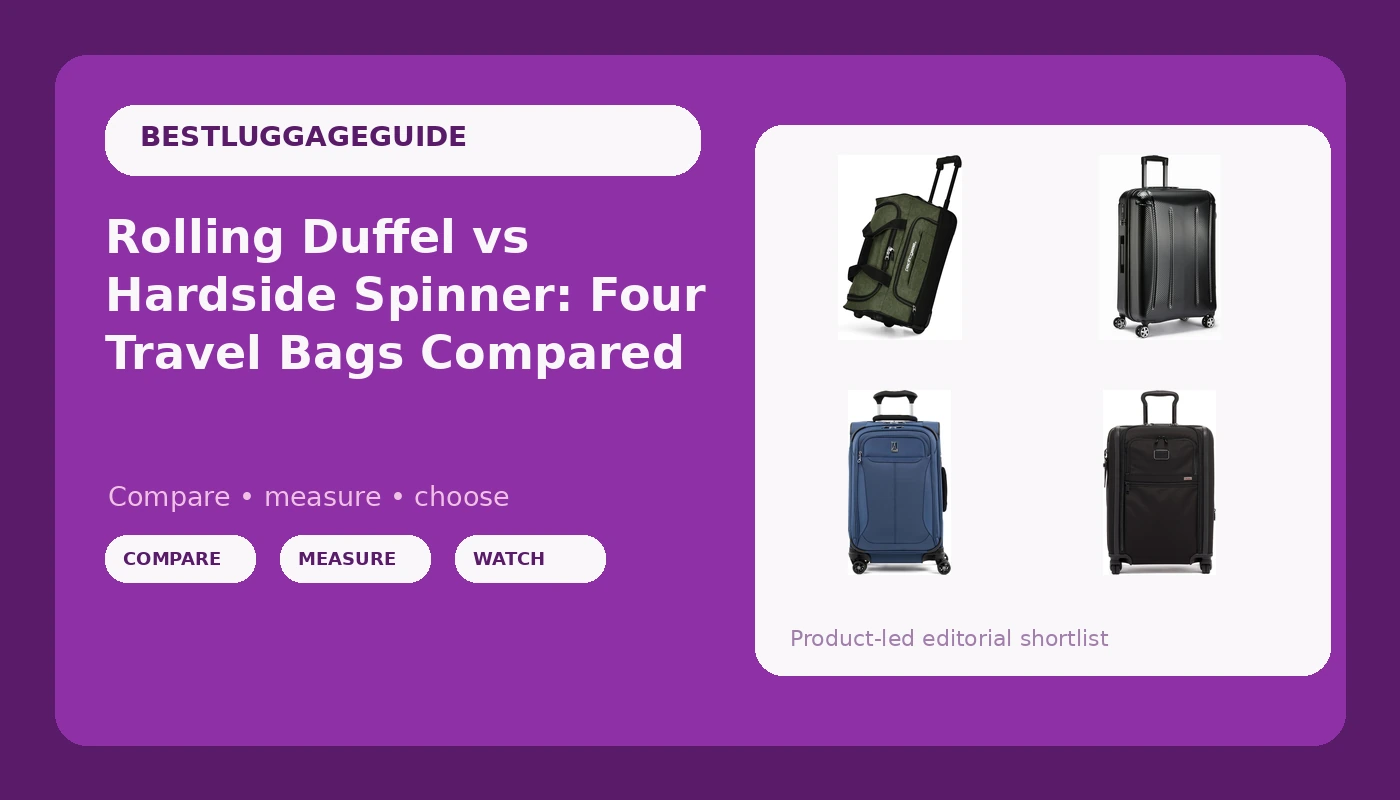
I spent six years as a gate agent at O'Hare, and in that time I watched more bags get thrown than I watched planes push back. That is the perspective behind this carry-on luggage comparison. A bag is a rental you buy. The airline treats it like it is disposable, so the only question that matters is whether yours survives the treatment. Product photos do not answer that question. Belt physics do.
The four bags below cover the four jobs a traveler actually has. The Pacific Gear Duffel Bag with Rolling Wheels is the gear hauler for road trips and equipment you would rather not hang off your shoulder. The Amazon Basics 30-Inch Hardside Checked Spinner is the long-trip container for people who have already accepted a checked bag. The Travelpro Tourlite Softside 21" Expandable is the weekly flyer's default. The TUMI Alpha Large Dual Access Expandable 4-Wheeled Carry-On is the premium bet, the one that tries to be a carry-on and a mobile office at the same time.
Related: Carry-On Size Rules: What Actually Fits the Bin
Short answer: the Travelpro Tourlite 21" softside is the best first bag for most people, because it is the size you will use on the majority of your trips and softside is the format that survives a gate check without cracking. The TUMI Alpha is the better bag and the worse value. The Amazon Basics 30-inch is correct only if you have already decided to check. The Pacific Gear duffel is the cheapest way to move a lot of non-fragile gear, and it is honest about being exactly that.
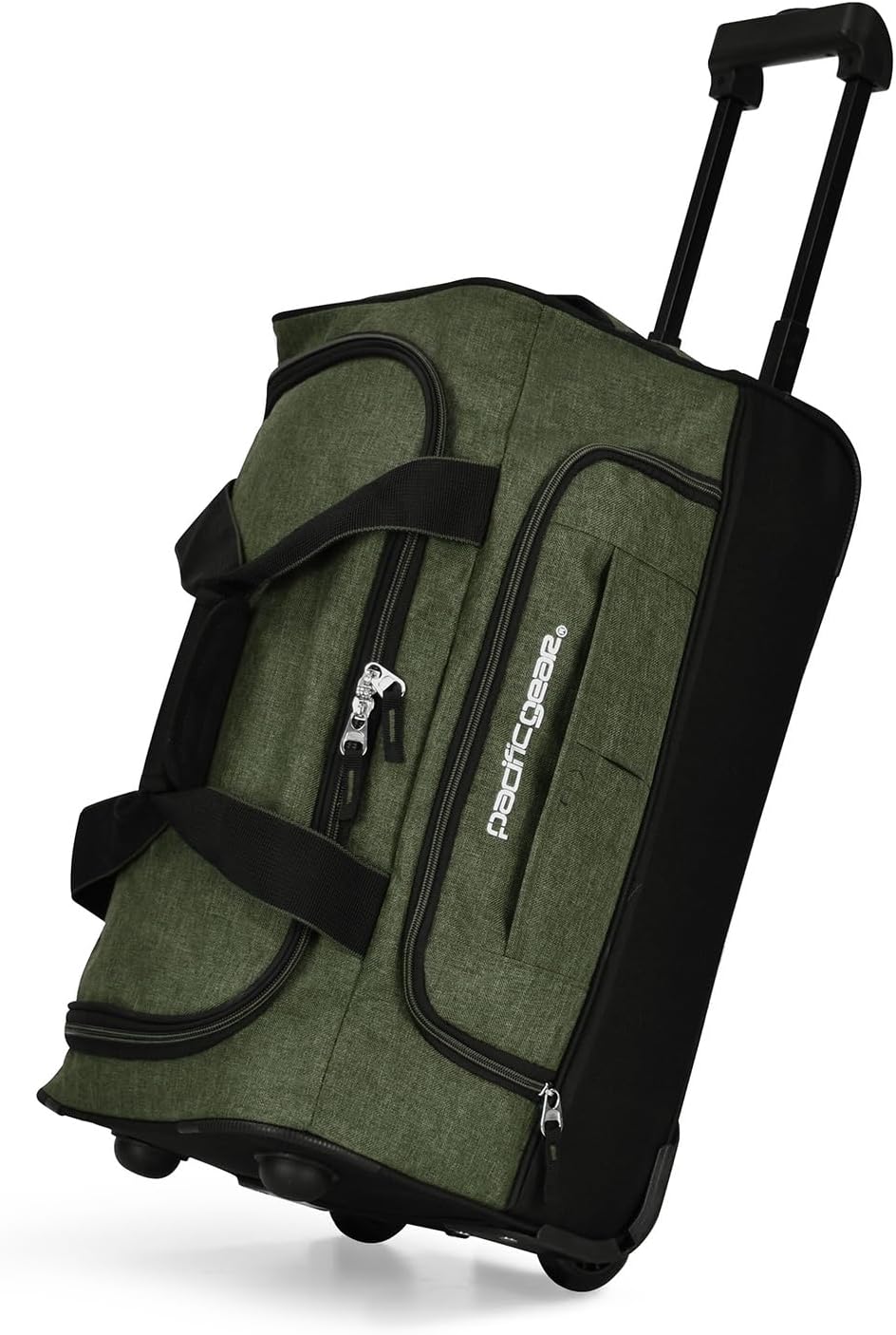
Pacific Gear Duffel Bag with Rolling Wheels
Soft sides absorb the throw, and the duffel shape swallows boots, helmets, and odd gear that no rectangular case will take
No structure, no crush protection, and a narrow wheelbase that tips on tile
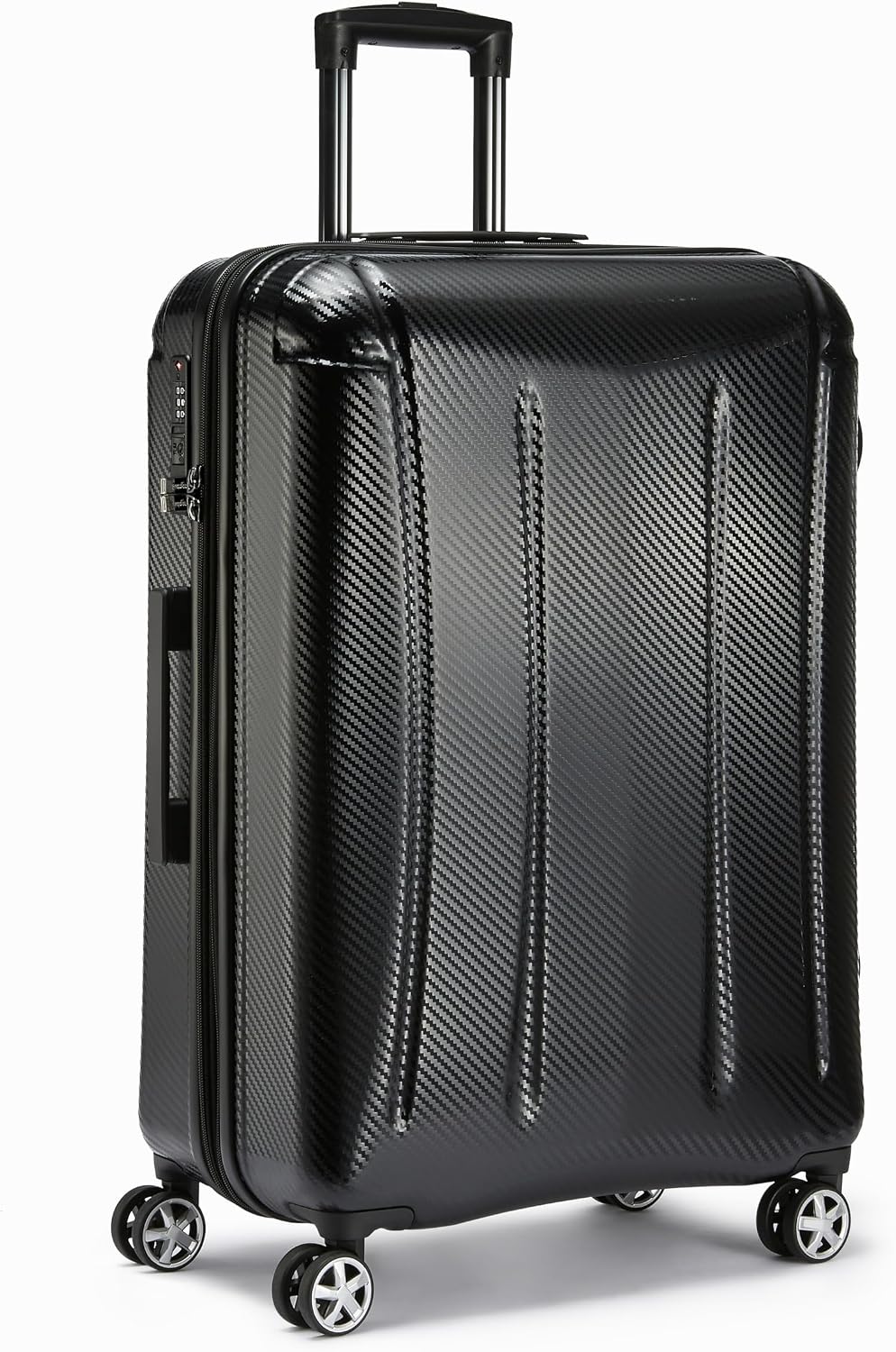
Amazon Basics 30-Inch Hardside Checked Spinner
Eight multi-directional wheels and a TSA lock at the size where you are checking anyway
A 30-inch hardside is a checked bag by definition, and shell corners are where the belt wins
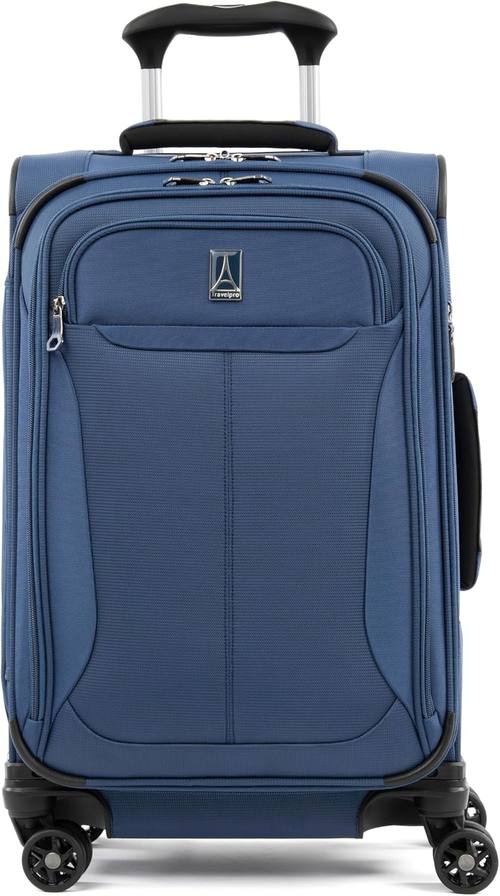
Travelpro Tourlite Softside 21" Expandable
The right size for most trips, four spinner wheels, and softside compression that fits the bin instead of fighting it
Less crush protection than a shell, and light fabric shows scuffs fast
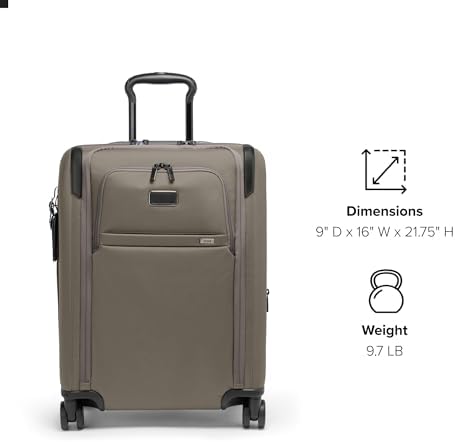
TUMI Alpha Large Dual Access Expandable 4-Wheeled Carry-On
Dual access is genuinely useful, hardware is a class above, and it expands for the return trip
The premium is enormous, and a "large" carry-on is exactly where bin fit gets tight
Prices and availability were captured from Amazon Creators API and may change.
How I judge a bag at the gate
Every bag I look at gets the same treatment I gave bags on the ramp, minus the throwing. First, linear inches. Length plus width plus height is the number the airline cares about, and it is the number that gets you stopped at the jet bridge. Second, bin fit. A bag can be legal and still not fit a regional jet overhead, which is how a carry-on becomes a gate check whether you planned for it or not.
Third, wheelbase. Set the bag on tile and push it with one finger. If it wanders, you will be fighting it through Terminal 2 at 6 a.m. with a coffee in the other hand. Four wheels with a wide stance track straight. Narrow two-wheel duffels tip. Fourth, handle wobble. Grab the extended handle and shake it side to side. Some play is normal. Rattle before the first flight is not. Fifth, the zipper. Zippers are the first thing to die on any bag, and the second is the handle. If both survive twenty flights, the bag was worth the money.
One disclosure, because it matters more than any spec sheet: I have not put all four of these bags through five flights each. Where I have not, I am judging the format, the hardware, and the listed dimensions, and I say so. What I have seen is thousands of bags come off the belt, and that tells you a lot about which formats fail.
Pacific Gear Duffel Bag with Rolling Wheels: the gear hauler
The rolling duffel is the oldest idea in travel gear and still the most underrated. Soft sides do not crack. They deform, absorb, and spring back, which is why duffels keep showing up on charter flights and road trips where the bag rides in a truck bed as often as a cargo hold. The duffel shape also takes things no rectangular case will: ski boots, a helmet, a folded tripod, a sleeping bag.
That same flexibility is the limitation. There is no frame, so there is no crush protection. Anything fragile in a duffel is fragile in a duffel. The wheelbase is narrow by design, which means it tips on polished airport tile and you end up dragging it at an angle. And because the sides are soft, the bag takes the shape of whatever is stacked on top of it in the cart.
Where it wins is value per cubic inch of stuff moved. If your trip involves gear rather than clothes, or if you need a second bag for the overflow that does not need armor, this is the sensible buy. Visit on Amazon →
Amazon Basics 30-Inch Hardside Checked Spinner: the long-trip container
A 30-inch hardside spinner is a checked bag, and pretending otherwise is how people end up at the gate arguing with someone like me. That is not a flaw. It is the whole point of the format. If you are moving a household for two weeks, you want the biggest legal container you can roll, and you want eight multi-directional wheels under it so you are pushing with two fingers instead of dragging with one arm.
The TSA lock matters more than people think. It keeps the zipper pulls together in transit, which is the actual failure mode on a checked bag, and it means you are not hunting for a cable tie at the check-in counter. The expandable section is the other honest feature here: you pack it tight on the way out and let it out on the way home when you have bought things.
The risk is the shell. Hardside wins the visual argument and loses the durability argument at the corners, where the belt drops a bag from height onto concrete. I have watched a lot of shells come up the belt with a cracked corner and a baggage claim tag on them. A hardside at this size is a reasonable trade if you accept that a checked bag is a consumable. Visit on Amazon →
Travelpro Tourlite Softside 21" Expandable: the weekly flyer's default
If you fly more than a few times a year, this is the size class to buy. Twenty-one inches is the number that actually fits the bin on the airplanes most people board, and softside is the format that flexes into a tight overhead instead of standing there like a brick while the line behind you sighs.
Four spinner wheels put the weight on the floor and off your wrist, which matters on a connection that is already boarding. The expandable section gives you a couple of inches of slack for the return leg. And Travelpro's reputation in this class comes from crew, not from advertising, which is a different kind of endorsement than a lifestyle campaign.
The trade-offs are real. Softside does not protect a bottle of anything, and it does not protect a laptop if the bag gets gate checked and thrown. Light fabric also picks up scuffs and stains, and blue shows every one of them. But a softside bag that gets gate checked at the last minute usually walks off the jet bridge intact, and I have watched too many hard shells not do that to pretend the aesthetic argument wins. Visit on Amazon →
TUMI Alpha Large Dual Access Expandable 4-Wheeled Carry-On: the premium bet
The dual access design is the reason this bag exists. You can open it from the top or from the front, which matters when the bag is wedged in a middle-seat row and you need one thing without unpacking the whole case. That is a real problem that most carry-ons do not solve.
The hardware is a step above everything else on this list, and it should be, because you are paying a premium that is measured in multiples rather than percentages. Expandability gives you the return-trip slack. Four wheels on a wide stance track straight and quiet on tile, which is the thing you notice most in an airport.
What it loses is the value argument, and it loses badly. Nothing about the build changes the math on linear inches. A "large" carry-on is the size where bin fit gets tight, especially on regional jets, and a bag this expensive is the one you least want to gate check. Buy it if you want one bag to do everything and you are willing to pay for the attempt. Do not buy it expecting the airline to treat it any differently than a $60 duffel. Visit on Amazon →
The specs that actually matter
Ignore the marketing copy and look for four numbers. Linear inches tells you whether the airline will let it on. Wheel count and wheelbase tell you whether you will enjoy getting it there. Expanded depth tells you whether the return trip is a problem. Everything else, including color, is preference.
The weight limit is a contract, and the case weight is part of it. Every pound the bag weighs is a pound stolen from your packing, which is why lightweight construction is not a gimmick. On a checked bag with a hard limit, a heavy shell is the difference between one pair of shoes and two.
One caution: carry-on size limits change, and they change by airline and sometimes by aircraft. Check your carrier's current published limit before you buy, because the number I would quote you today may not be the number the gate agent applies next spring.
Which bag for which trip
Weekly business travel, one bag, overhead bin: the Travelpro Tourlite 21" softside. It is the size you will use, and softside is the format that survives the jet bridge.
Two-week trip with a checked bag already in the plan: the Amazon Basics 30-inch hardside spinner. Eight wheels, a TSA lock, and expansion for the way home.
Road trip, ski trip, or hauling gear: the Pacific Gear rolling duffel. Nothing else on this list takes a helmet.
One bag, premium build, work and travel in the same case: the TUMI Alpha. It is the best bag here and the hardest to justify.
What I'm watching next
The interesting movement in this category is not at the top. It is the sub-$200 hardside class, where direct-to-consumer brands keep pushing shells lighter and wheels quieter, and where the first brand to solve zipper reliability will take the frequent flyers. Softside is also due for a comeback as carriers tighten carry-on enforcement, because a bag that compresses fits a bin that a rigid shell does not.
I keep a running list of every bag I have watched fail at the belt, sorted by failure point: zipper, handle, wheel, shell corner. The zipper column is still the longest by a wide margin. Until that changes, the format question matters less than the hardware question, and the cheapest bag with good hardware beats the most expensive bag with bad hardware every time.